How to handle a stuck Bitcoin transaction
Check an unconfirmed payment, compare RBF and CPFP, and avoid duplicate sends or fake transaction accelerators.
The quick answer
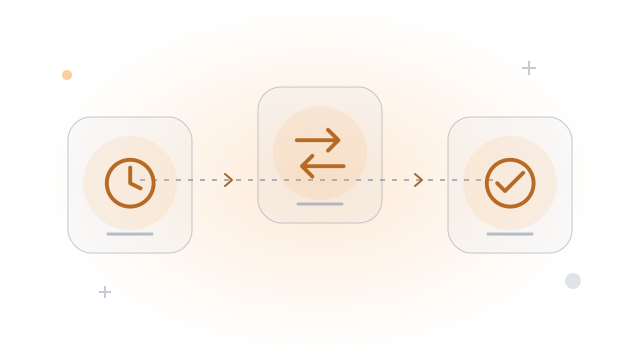
An unconfirmed payment is not automatically lost. First find out whether it was broadcast, remains in a mempool, has a replacement, or is already confirmed.
Fix the existing payment, not a screenshot
Different nodes can have different mempools. A missing explorer result is not enough to declare a payment canceled. Check your wallet and another reliable source, and contact an exchange if it controls the sending keys.
Step by step
- 1
Look up the transaction ID
Check confirmations, fee rate and any replacement transaction. Verify that the ID belongs to the payment you intended. A provider withdrawal may still be waiting internally before broadcast.
- 2
Use RBF if your wallet supports it
The sender can often create a replacement with a higher fee. Wallet support and relay rules matter; you cannot assume an on-screen replaceability label is the whole story.
- 3
Consider CPFP or wait
If you control a spendable unconfirmed output, a child transaction may raise the combined package fee. Otherwise, waiting or asking the sender to bump the fee may be the practical option.
Worked example
A 200-vB parent pays 200 sats. With a 100-vB child, a 5-sat/vB package needs 1,500 sats in total. The child must contribute 1,300 sats, before any additional policy requirements.
Before you continue
A related question
Does a dropped mempool transaction cancel everywhere?
No. Another node may retain it, and it can be rebroadcast. A conflicting spend is only settled when the network confirms one of the competing transactions.
Try it with a tool
Sources & further reading
Source links checked on 15 Oct 2026. Examples explain the mechanics; provider fees and features can change.
- Bitcoin Optech bitcoinops.org
- Lightning Labs docs.lightning.engineering