What is Bitcoin? A beginner’s guide
Understand Bitcoin, satoshis, wallets and the blockchain, then follow a payment from a digital signature to its first confirmation.
The quick answer
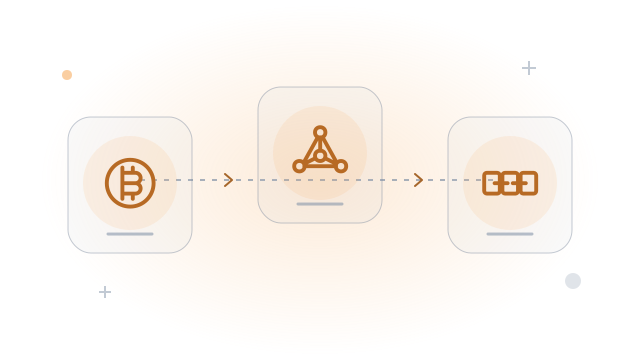
Bitcoin is a digital payment network without a central account operator. Its unit is BTC. A wallet manages the keys that let you spend; the coins themselves are recorded on a shared ledger.
Keys, nodes and miners do different jobs
Your private keys authorize payments. Nodes independently check the rules. Miners compete to add valid blocks using proof of work. Validating nodes reject blocks that break their rules, even when a miner finds proof of work.
Step by step
- 1
Start with the units
One BTC contains 100,000,000 satoshis, often called sats. You can buy or send a fraction of a bitcoin; owning a whole coin is not a requirement.
- 2
Follow a payment
A wallet signs a transaction and broadcasts it. Nodes check that its inputs can be spent. A miner can then include it in a block.
- 3
Recognize confirmation
Inclusion gives the transaction its first confirmation. Later blocks add confirmations. Ten minutes is a target average between blocks, not a payment deadline.
Worked example
A payment of 0.001 BTC is 100,000 sats. Its fiat value changes with the exchange rate; the number of sats does not change just because the market moves.
Before you continue
A related question
Is Bitcoin anonymous?
No. On-chain transactions are public. Addresses do not automatically show a legal name, but payments and outside information can link them to a person.
Try it with a tool
Sources & further reading
Source links checked on 15 Oct 2026. Examples explain the mechanics; provider fees and features can change.
- Bitcoin.org bitcoin.org
- Bitcoin Developer Guide developer.bitcoin.org